Showing posts with label Special Interests. Show all posts

September 20, 2023

10 Common Interests for Hyperlexic Kids

Wondering what some of the most common interests for hyperlexic kids are and what your child might move to next? This list can help!

Hyperlexic kids have intense passions or interests right from toddlerhood. 

Interests that can last for years, not just a month or two. 

These interests can also be so intense that it might seem as if your child will never move on to anything else. And that they'll only ever be interested in this one thing.

But they do eventually move on. 

Maybe they move to geography or flags or numbers next. Then they do that for a year or two. 

Or maybe they're still in the letter phase and you are wondering what could possibly come next after their fascination in letters. 

Maybe you just want to know what could come next. That way you can get a head start on learning about those specific topics. 

Basically, you want to be prepared. You know, so you can keep up with them if they do move to something else on this list that you know next to nothing about. Case in point: those languages they might teach themselves that you don't speak...

Anyway, that's where this list of common interests for hyperlexic kids comes in. It will give you an idea of what interests may lay ahead for your hyperlexic child. It also gives you suggestions of topics that you could introduce your child to next. 
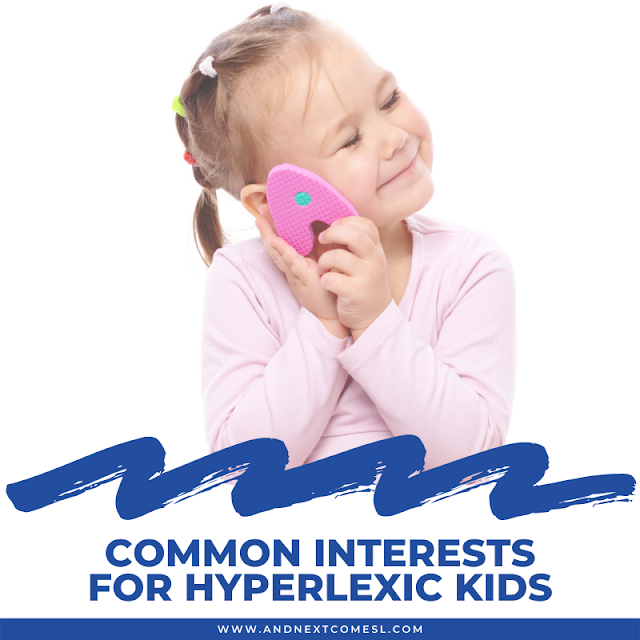
Common interests for hyperlexic kids

Hyperlexic kids have intense passions or interests that can last for many years

10 Common Interests for Hyperlexic Kids

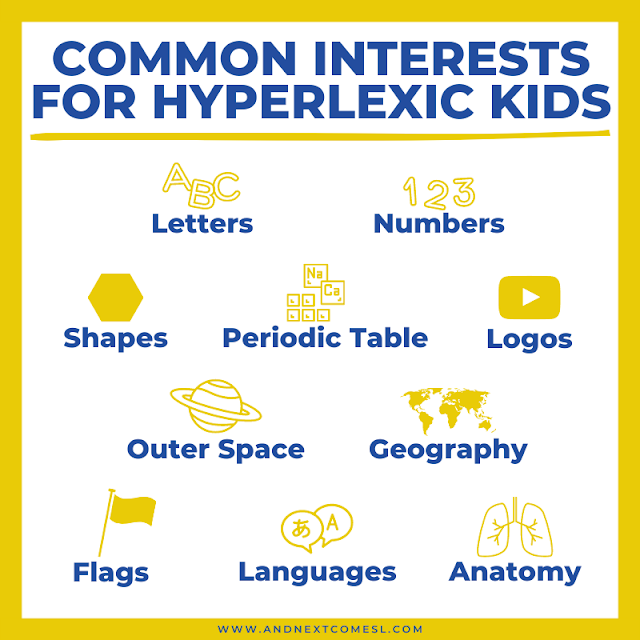
The following list includes the most common interests reported among hyperlexic kids. They are interests that most hyperlexic kids explore at some point.

Now, please keep in mind that the following list is by no means exhaustive. There are obviously lots of other interests that your hyperlexic child might gravitate towards including presidents, music, warning signs, traffic lights, colors, or all things video games related. 

Also, please remember that if your hyperlexic child doesn't show interest in some of these other interests, that doesn't make them any less hyperlexic. For instance, my son was never interested in the Russian alphabet, even though it is a super popular interest for other hyperlexic kids, and he is still 100% hyperlexic.

So having said that, let's take a look at what the most common interests for hyperlexic kids are. They include:

1. Letters

The first interest for most - if not all - hyperlexic kids would be letters. It's something they pick up on naturally and super early. Usually well before age two (see hyperlexia milestones for more info). 

This interest may include learning the alphabet in different languages (another interest we'll discuss in a bit). 

An interest in letters may also eventually evolve into an interest in fonts or typography.

The first interest for most - if not all - hyperlexic learners would be letters

2. Numbers & Math

Usually the next interest that appears early on is an interest in numbers and math. 

Sometimes this interest even takes over letters - hello, hypernumeracy

Their favorite toy is might be a calculator (or two or three).

These kids can quickly figure out patterns and relationships between numbers and begin to do math well above what would be expected for their age. 

As they grow, this interest might lead to an interest in Roman numerals, calendars, fractions, logic problems, or more complex math.

Sometimes a hyperlexic child's interest in numbers and math takes over letters. It's possible that they might have hypernumeracy as well.

3. Geography & Maps

After letters and numbers, many move to geography and maps next. 

They'll quickly learn all the names of the countries, what the shapes of those countries are, where they're located in the world, their capital cities...really anything about geography! 

4. Flags

Another popular interest is flags, which isn't surprising given how many gravitate towards geography and maps. 

There are many young hyperlexic preschoolers who can identify and name hundreds of different flags from around the world. It's really amazing!

Many hyperlexic kids have an interest in geography, maps, and flags

5. Logos

Many hyperlexic kids love logos. Two popular favorites being the Pixar logo and the 20th Century Fox logo. 

Car brand logos are also a favorite for these kids. 

There's just something about logos and brands that appeal to our hyperlexic learners (probably all those letters!). 

You can often find these kids recreating logos using their alphabet toys as well.

6. Languages

Remember how I said the interest in letters can often mean learning the alphabet in different languages? Well, that's just the starting point for many hyperlexic kids! 

Many of them will go on to teach themselves a variety of languages. Popular choices include Russian, Arabic, or Korean. I would said Russian is likely the most popular one of the bunch though!

Many hyperlexic kids will go on to learn a variety of languages

7. Outer Space

Another common interest for hyperlexic kids is learning about the solar system and planets. There's just something about outer space that's appealing to them. 

My word of advice: be prepared to have a favorite moon of Jupiter because they'll definitely ask you at some point which one you like. 

8. The Periodic Table

One of the reasons why I think the periodic table is a common interest for hyperlexic kids is because of all the letters and numbers that are included on it.

Regardless, hyperlexic kids love learning about the periodic table so don't be surprised if your hyperlexic child moves to this interest next.

9. Shapes

Many young hyperlexic kids are fascinated by shapes and we're not talking about just triangles and squares here. We're talking dodecahedrons and other complex shapes. This interest naturally stems from the interest in math.

10. Anatomy

Another common interest is anatomy. Many hyperlexic kids love to learn about the human body, including the different body systems, the functions of organs, and so on. So be prepared to hear facts about the human body for quite some time!
Common interests for kids with hyperlexia

So what do you think of this list of common interests for hyperlexic kids? Has your hyperlexic child shown an interest in almost all of these interests as well? I bet they at least checked a few boxes off though!
Common interests for hyperlexic kids

Continue reading "10 Common Interests for Hyperlexic Kids"

October 11, 2022

20+ Common Autism Special Interest Areas & Examples

Wondering what the most common types of special interests in autism are? Here's a detailed list of autism special interest examples and categories.

There are a lot of stereotypes about autism out there. For instance, when most people think about special interests in autism, they probably think of things like trains, impressive math skills, or maybe even penguins after watching a TV show like Atypical. 

But not all autistic people are into memorizing train schedules and learning about different types of locomotives. Nor are they all mathematical savants or animal lovers. Shocking that the most common special interests you hear about are just stereotypes...

The point is that their special interests vary a lot. There's a wide range of topics and categories that they're into besides trains or penguins, as you'll soon see in this list of common autism special interest examples. So let's explore what those common themes and categories are.

Common autism special interest areas & examples

The Most Common Categories of Autistic Special Interests with Examples

Recent research has described the most common special interests found among autistic individuals. For instance, Jordan and Caldwell-Harris (2012) found and described 18 different categories. Nowell et al. (2020), on the other hand, described over 30 categories (although many of them could have been combined into one broader category). 

Please keep in mind that the following list of categories is by no means exhaustive. There are many more special interests that could be captured on this list and it's impossible to get them all.

Instead, this list is meant to give you an idea of the wide range of intense interests that autistic people have. 

Common special interests in autism

It's also worth noting that sometimes an interest may be so unique that it doesn't fit neatly into any of these categories. Or, an interest may fit into more than one category.

While this list of special interest areas is based on the themes found in the research, it does include suggestions reported by autistic adults and parents of autistic kids as well.

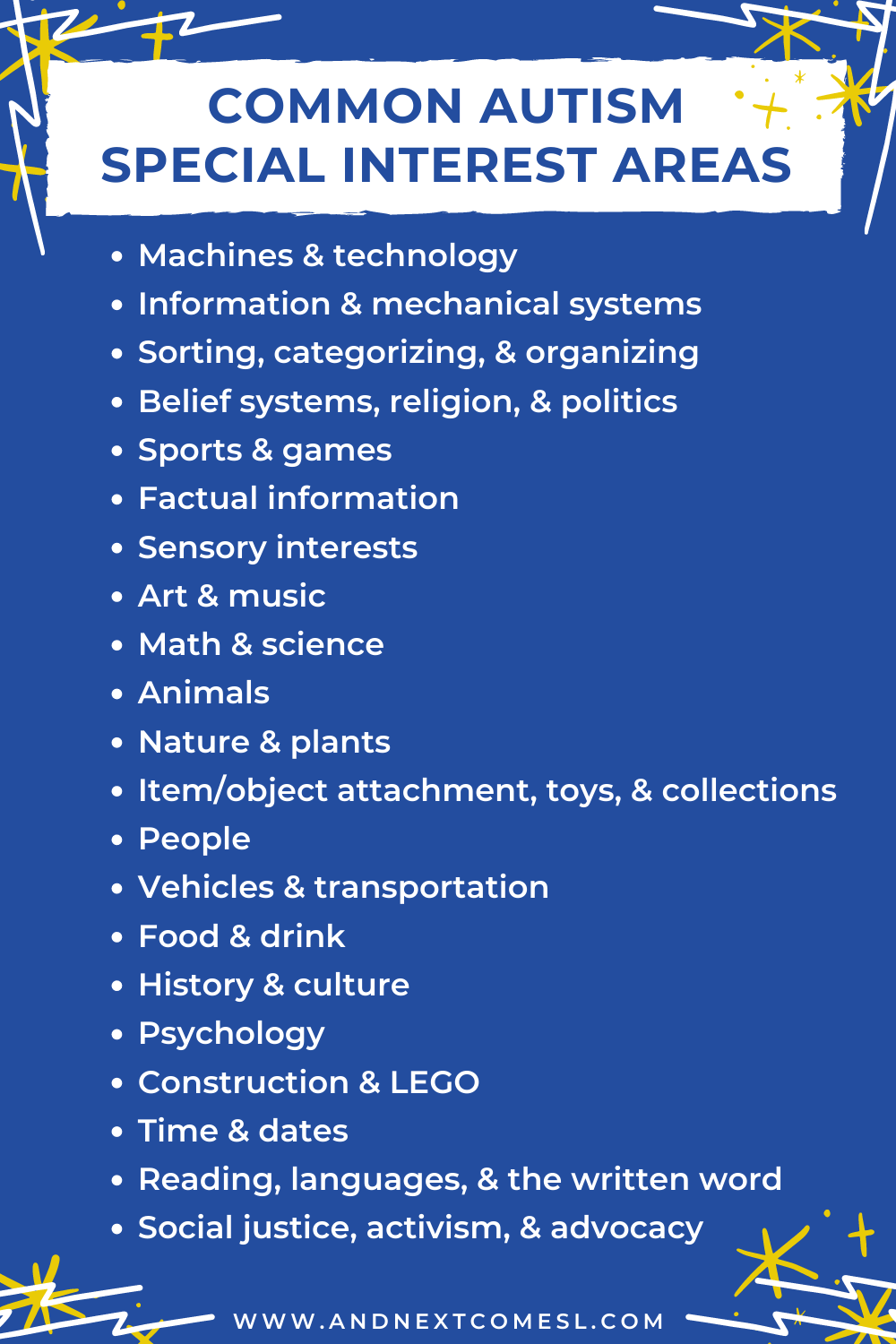
Usually, autistic special interests fall into one of the following categories:

1. Machines and technology

  • Elevators, computers, clocks, radios, fans, computers, video games, watching things turn, pressing buttons, taking things apart, coding, TV

2. Information and mechanical systems

  • Plumbing, wiring, maps, train/subway schedules, city planning, traffic lights, intersections/roads, interest in creating systems of their own such as maps or languages, asking questions about how things work, memorizing routes, schedules

3. Sorting, categorizing, and organizing

  • Lining up objects, arranging things and putting objects in specific orders (alphabetical order, color order, etc.), making lists

4. Belief systems, religion, and politics

  • Religions, mythologies, alternative beliefs, political systems

5. Sports and games

  • Chess, board games, video games, bowling, basketball, baseball, football, sports facts and stats

6. Factual information

  • Trivia, memorizing stats and lists, reading dictionaries, making lists of facts, quizzing people, interest in fonts used in logos and designs, reading non-fiction books

7. Sensory interests

  • Seeking out specific types of sensory input, playing with slime or kinetic sand, exploring lights and shadows, spinning objects

8. Art and music

  • Digital art, sewing, fashion, writing, knitting, carpentry, movies, listening to music, playing an instrument, TV shows, movies, famous musicians, photography

9. Math and science

  • Geology, astronomy, physics, chemistry, engineering, numbers, math, measurement, meteorology, logic, specific diseases, anatomy

10. Animals

  • Learning facts about animals, doing animal related activities such as visiting aquariums and bird watching, drawing pictures of animals, making animal sounds, volunteering at pet shelters, pets

11. Nature and plants

  • Gardening, hiking, natural disasters (hurricanes, volcanoes, etc.), types of plants

12. Item/object attachment, toys, and collections

  • Collecting items such as Pokemon cards or rocks or stamps, enjoying figurines or plush toys or certain dolls, special attachment to a particular item or type of object such as specific book or a blanket

13. People

  • Famous/interesting people, presidents, composers, YouTubers, interacting with people online (or offline), groups of people

14. Vehicles and transportation

  • Trains, airplanes, buses, fire trucks, construction vehicles, traffic lights, road signs, ocean liners, car logos

15. Food and drink

  • Baking, cooking, consuming food

16. History and culture

  • Learning about specific time periods, languages, countries and their capitals, flags, Titanic, wars, historical events and their dates

17. Psychology

  • Learning about autism or psychological disorders

18. Construction and LEGO

  • Interest in building things and engineering, carpentry and wood working, building with LEGO

19. Time and dates

  • Interest in timers and watches/clocks, needs to know what time it is at all times, fascinated with calendars and specific dates, likes to know what day it is and what is happening when 

20. Reading, languages, and the written word

  • Reading, learning different languages, making up own languages, alphabet obsession, fascination with fonts

21. Social justice, activism, and advocacy

  • Passionate about autism advocacy and social issues related to gender, race, morals, ethics, etc.

A list of the most common special interest areas for autistic people

Some Final Notes on this List of Autism Special Interest Examples

As you can see, autistic people are into much more than being a human calculator, memorizing train schedules, and rattling off facts about penguins. Their interests are rich and diverse. Some are very niche. Others are more common.

A quote about autistic special interest areas

Also, some interests may or may not fit neatly into these categories, which is why Jordan and Caldwell-Harris (2012) also included an "other" category in their research autistic special interests. So if your child's individual interests (or your own special interests!) don't fit into these categories, that's okay. 

Maybe you think that many of the examples on this list look like simple hobbies and nothing more. But hobbies and special interests aren't the same thing. Keep that in mind.

Hopefully, these autism special interest examples and different interest areas reminded you of how important it is to think beyond the stereotypes of autism. 

Common autism special interest areas & examples

Continue reading "20+ Common Autism Special Interest Areas & Examples"

September 28, 2022

Infodumping in Autism: What You Need to Know

What is infodumping in autism? And why do autistic people infodump? Find out below.

Understanding various aspects of autistic culture is important, especially if you are raising or parenting an autistic child and want to have a supportive relationship with them. 

Or even if you're a teacher with autistic students. 

Or a therapist working with autistic clients.

Regardless, part of that learning process might involve learning about samefoods and special interests, for instance. 

Or, in this case, learning about one of the neurodivergent love languages called infodumping, which, by the way, is closely related to special interests. The two go hand-in-hand.

Now, perhaps you've encountered the interesting conversation style of autistic infodumping before. And, presumably, you're curious to learn more about it. That's likely why you're here, right?

Well, let's take a closer look at what infodumping in autism is, how it's related to special interests, and why autistic people use this style of communication.

A look at infodumping in autism, including what it is and why autistic people infodump

What is Infodumping in Autism?

Infodumping refers to the the autistic tendency to excitedly share a large amount of information about a highly-focused subject or passion at one time, usually in great detail and length.

What is infodumping? A definition

In terms of detail, autistic people might attempt to share absolutely everything they know about the topic. It is worth noting that usually the topic is one of their special interests or something related to it. So, unsurprisingly, they know a lot about it. 

What starts off as sharing one or two interesting facts may quickly snowball into sharing an entire textbook or Wikipedia entry's worth of information or more. As a result, the information shared during an infodump session is often quite detailed, in-depth, and exhaustive.

What starts off as sharing one or two interesting facts can quickly snowball into infodumping

As for length, they may talk about the topic for long periods of times, even hours, regardless of the other person's interest level. 

So quite often autistic people may miss body language changes or nonverbal cues from others that indicate that the other party is bored or not interested in the topic. This happens simply because they get so engrossed talking about it.

There is another term for infodumping that you may have seen before. Sometimes it's referred to as monologuing. Makes sense given that monologues are defined as long speeches delivered by a single person. So you may see these two terms used interchangeably in autistic spaces.

Why Do Autistic People Infodump?

It's important to know that infodumps are an authentic form of communication and conversation style for autistic people of all ages, even autistic kids. 

Infodumps are an authentic conversation style for autistic people

In other words, it's a natural way for them to communicate because of its directness and focus on facts and logic. 

For some, infodumping is also a love language. So it can be a way for autistic individuals to express what they are passionate about with those they care most about. 

Infodumping is a great way for autistic people to share their special interests with others

So why do autistic people infodump exactly? Well, there are a few reasons, including:

  • To share their passion, joy, enthusiasm, and excitement
  • To express themselves in a way that is authentic and natural
  • To share knowledge and information, usually in great detail and length
  • To build connections, bond, and communicate with others
  • To make friends and/or find a sense of community
  • To self-regulate
  • To create a sense of pride
  • To release a build up of thoughts that need expressing (i.e., they have an intense need to share their thoughts or else it feels like they may explode)

There are likely a handful of other reasons why infodumping is necessary for autistic people so keep in mind that this list is by no means exhaustive. However, as you can probably see, this style of communicating is valuable and beneficial for them in a lot of ways.

Reasons why autistic people infodump

So Should You Encourage Your Autistic Child's Infodumping or Not?

Like a lot of autistic traits and elements of autistic culture, infodumping is misunderstood by a lot of people.

For instance, some therapists or professionals might tell you to discourage and redirect their monologues. Kind of like they do for a lot of things...So, too often, the autistic's urge to infodump is viewed as rude, self-absorbed, dominating, the list goes on and on. 

The reality though is that infodumping is just one way that autistic individuals communicate and engage in conversations with others. It's how they connect. It's how they relate. 

Infodumping is just one way that autistic people communicate

So the short answer is yes, you should encourage your child to infodump. After all, there are a lot of benefits to doing so.

When you allow your autistic child to infodump, you are showing them that you care about them and their special interests. It's just one way to encourage your child's special interests by the way. So be genuinely curious and a good listener while they're infodumping. Ask questions, if appropriate.

Allowing your autistic child to infodump is one way to show them you care about them and their special interests

When you let your autistic child infodump, you are also validating and affirming what comes naturally to them. 

Essentially, you're acknowledging that this is how they communicate and that you will honor their communication no matter what form it comes in. Kind of like you would or should with echolalia and scripting.

Letting your autistic child infodump also validates and acknowledges their communication attempts

But what if your autistic child is non-speaking, what should you do? Can they even still infodump? 

You bet they can. If you give them the tools to do so. 

For instance, you could create a page of things dedicated to their special interests on their AAC device to encourage infodumping. This video from @nigh.functioning.autism has some great suggestions.

They may also engage in infodumping by writing their thoughts down in a book or journal, showing you a video or book, pointing to things, and so on.

Non-speaking autistic children can infodump too

Some Caveats & Final Thoughts on Infodumping

Now, having said all that, there are a few caveats and things to consider when it comes to infodumping. It's not like we can engage in all day conversations about Titanic's sinking or the many moons of Jupiter. In most cases, that's not realistic, maintainable, or even practical.

So you might have to consider setting some boundaries, like letting them infodump for a few minutes and then letting you respond for a few minutes. Or finding a different way to encourage them to infodump. They could try journaling or recording a video, for instance. Infodumping doesn't always have to be through spoken language.

You might also have to teach them how to engage when others are infodumping on them and they don't like the topic. Because that can happen too. So they might need help knowing what to do.

It might also be helpful to find your child a special interest group or an autistic friend whom they can infodump with. It's an amazing feeling to meet and connect with others who share the same enthusiasm as you do for certain topics. And they may be more accepting of infodumping as a result (at least compared to how most neurotypical people are). 

Regardless, infodumping or monologuing is a valuable form of autistic communication that should be honored, acknowledged, and encouraged as much as possible. Not something to be just be automatically disregarded and redirected. That's not a great approach to anything really.

Infodumping is valuable and beneficial for autistic individuals

Anyway, I hope you learned a few things about infodumping in autism and now have a better understanding of why it's important to autistic individuals.

A look at infodumping in autism, including what it is and why autistic people infodump

Continue reading "Infodumping in Autism: What You Need to Know"

September 24, 2022

Tips for Using Special Interests in Autism & Hyperlexia

Wondering how to incorporate your child's special interests? Here are some tips for using special interests in autism and hyperlexia.

One thing you'll hear me say over and over is to use or incorporate your child's interests, whatever they may be. 

So, for hyperlexic kids, that's leveraging their interests in letters or numbers or flags or the periodic table...

But maybe you're just not quite sure how to do that exactly or where to start. And that's okay. 

Admittedly, some interests are a bit trickier to work with and incorporate, while others are a lot easier. 

No worries though. You'll find some tips for using special interests below that should make things a bit easier. So let's dig in!
Tips for using special interests in autism and hyperlexia (as well as things you shouldn't do!)

Important Disclaimers for Using Your Child's Special Interests

There are a couple of common mistakes that can be made when leveraging special interests in autism and hyperlexia. In other words, some people approach it all wrong and inadvertently cause more harm than good. 

Since you should avoid making these same mistakes, we're going to discuss them first. That way you know what not to do. 

1. Don't change their play or limit it

The goal should never be to change how an autistic or hyperlexic child plays. All forms of autistic and hyperlexic play are valid so it's important that you respect their play, no matter what form that comes in (see strategy #2 here for more information). 

Respect autistic and hyperlexic play

So don't correct them or tell them how to play with certain materials. Instead, let them lead. 

After all, play should be child-led. Let them guide how they want to interact and engage with the materials.

Also, please don't limit or take away things that are important to them, which - newsflash - their special interests are incredibly important to them. You can read more about why you shouldn't discourage your hyperlexic child's letter play here to get a better understanding of why you shouldn't limit access.

Although, please note, if a special interest is causing harm to themselves, others, or property, then you may need to redirect their play to something safer. That's the only exception here.

Only redirect special interests if they are unsafe or are causing harm

2. Do not use their special interests as rewards or for manipulating them into doing something

Want to know the quickest way to suck the joy right out of your child's special interests? Well, every time you withhold access to their interests as a reward or use their special interests to manipulate them into complying, that's exactly what you're doing.

Special interests should be incorporated into other activities, not used as a way to manipulate a person into behaving or acting a certain way. Compliance should never be the main goal for accessing their special interest.

Special interests should be incorporated into other activities, not used as a reward

Tips for Using Special Interests in Autism & Hyperlexia

So now that you know what not to do, let's look at what you should do when it comes to leveraging special interests. After all, it's incredibly important that you do encourage their interests, especially considering how many benefits there are to doing so.

1. Use their interests as a calming/coping strategy

For many autistic and hyperlexic individuals, engaging with a special interest has a calming effect. Their interest can be a source of comfort or help distract them when they feel stressed. In other words, engaging with the special interest can reduce anxiety (see benefit #6 here) and build self-regulation skills. That may look like:

  • Offering them extra time to organize and alphabetize their letter magnets or to line up cars in rainbow order after a long day at school

Special interests are great for teaching self-regulation and coping skills

2. Incorporate their interests into the learning process

This tip is all about teaching to their talent (see point #7 here). You can easily add their favorite things to any learning activity just by simply adding some relevant clipart or using their favorite toys. You just have to get creative! For example, this tip may look like:

  • Counting Pokemon figures as a way to practice math facts instead of using math cubes or counting bears
  • Making printable writing worksheets with clipart and the names of previous presidents as a way to work on handwriting skills
  • Making a craft related to their special interest to work on fine motor skills

Teach to the talent by using their strengths and incorporating their interests into the learning process

3. Incorporate their interests into play, therapy, and school

Before my son was officially identified as autistic and hyperlexic, we did a lot of hands on sensory play. So, over the years, we have done tons of activities that leveraged both of my sons interests. It's kind of my jam. There's a reason why there are so many math, letter, Pokemon, music, and video game related ideas on my blog!

The point here is that interest based activities and materials should be offered at home, in therapy, and at school. That may look like:

  • Rolling playdough into letters and numbers as a way to explore new sensory experiences
  • Printing off a game of logo or flag bingo as way to work on speech and language
  • Building letters out of LEGO as way to encourage them to play with a toy they wouldn't normally want to play with
  • Letting them teach about their special interest as part of a presentation at school

Use interest based activities and materials at home, in therapy, and at school

4. Use their interests to model and build social skills

Encouraging your child to talk about their special interests can provide you with a great opportunity to model and build social skills such as turn taking, asking follow up questions, staying on topic, being a good listener, etc. You can also build these skills while playing. That may look like:

  • Playing with letters, making them go down a slide, for instance, and saying, "It's G's turn to go down the slide!" or "P wants a turn!"
  • Asking your child relevant questions about their special interest and giving them time to answer
  • Looking for a special interest group so they can meet others who share their interests, build friendships, and make connections

You can use special interests to model and build social skills

5. Use their interests to boost speech and language skills

Your child's special interests are a great way to build speech, language, comprehension skills, and communication. This may look like:

  • Modeling scripts (or gestalts) while playing alongside your child with their special interests
  • Encouraging them to talk about or share their passions with you
  • Using games based around their special interests to practice speech sounds or articulation
  • Practicing comprehension strategies using stories about their preferred interest

Leverage special interests to boost speech and language

6. Incorporate their interests into family life & daily routines

There are lots of ways to incorporate their interests into family life and day-to-day life. Again, you might have to get a bit creative here, but it's worth it! This may look like:

  • Serving up number pancakes for breakfast on Saturday mornings while you watch some Numberblocks episodes
  • Planning experiences around their interests (e.g., going to a movie, visiting a museum related to their special interest, etc.)
  • Playing a board game together as a family that's related to their special interest
  • Buying alphabet pajamas and bedsheets to help with bedtime routines
  • Doing a family read aloud with a book about their special interest
  • Making a visual schedule that includes clipart of their interests
  • Writing social stories that use their favorite characters or interests

Try incorporating your child's interests into daily routines for better buy-in

7. Use their interests to teach intrinsic motivation

We're not talking about rewards or extrinsic motivation here. We already discussed that earlier in the post. Instead, we're talking about developing intrinsic motivation, where they're driven to engage in a task simply because it's enjoyable and fun. That means you are:

  • Offering them a choice to do interest-based projects versus forcing them to do a specific topic or project
  • Never forcing them to comply in order to earn their special interest

Use special interests to teach intrinsic motivation

Tips for using special interests in autism and hyperlexia (as well as things you shouldn't do!)

Need More Ideas for Using Your Child's Interests?

If you still need some guidance with this topic, I highly recommend checking out the book Just Give Him the Whale! It has lots of suggestions for using a child's interests.

Just Give Him the Whale book cover

But I get that sometimes a child's special interests may be a bit more unusual or unique and it might be harder to come up with good ways to naturally incorporate their interests...

Well, The Creating Connections workbook and ebook might be just what you need! It's all about using an autistic or hyperlexic child's interests and passions, no matter how different they are, from lawn mowers to elevators!

Creating Connections ebook cover

Get your copy of the Creating Connections ebook

Hopefully with the tips and suggestions above you feel much more confident using special interests in autism and hyperlexia. Good luck!

Tips for using special interests in autism and hyperlexia (as well as things you shouldn't do!)

Continue reading "Tips for Using Special Interests in Autism & Hyperlexia"

September 22, 2022

Strategies for Encouraging Your Child's Special Interests

Are you wondering how to encourage your autistic or hyperlexic child's special interest? Here are some tips and strategies for encouraging special interests.

Many professionals and parents have been lead to believe that it's best to discourage or limit the special interests of autistic or hyperlexic children. 

And, too often, it's advice that so-called specialists have given parents of hyperlexic children about their letter play (see mistake #4 here). Maybe you've even been told this yourself.

But the research and the lived experiences of autistic people have told us otherwise. 

Besides, the benefits of special interests are plentiful. So why would we actively discourage something that is so valuable and beneficial to the well-being of autistic and hyperlexic individuals? It doesn't make any sense, does it?

Obviously, we need to be encouraging special interests, not discouraging them. So let's take a look at some strategies for doing just that.

Strategies for encouraging your autistic or hyperlexic child's special interests

Strategies for Encouraging Special Interests

Some special interests can be really easy to encourage simply because the topic is more broad or popular. So there's more options, books, and ideas available. 

Other interests, however, may be a bit trickier to nurture due to how specific or niche they are. As a result, there might not be as many available options. I mean it's not like it's easy to find a special interest group for kids who love elevators, especially at a local level.

Regardless, the following tips and strategies will help you encourage your child's interests, no matter what shape or form they take. 

We should be encouraging special interests, not discouraging them

1. Give them time to pursue their preferred interests and explore their interests fully

Remember, special interests often involve becoming an expert in that subject. That's what differentiates a special interest from a hobby after all. Besides, autistic individuals tend to go all-in on their special interests so it's important to give them the time and space to do so. Here are some suggestions:

  • Allow them to research the topic of their special interest in depth
  • Encourage them to explore related fields and think broadly about their special interest (e.g., an interest in astronomy = learning about constellations, how to use a telescope, using star charts, meteor showers, Northern Lights, planets, etc.)
  • Try not to interrupt when they're hyperfocused
  • Let them find a natural end point or give them a clearly defined end point when transitioning to something else (e.g., they'll stop once they've finished reading three pages in their book about planets or once they've spelled 20 words with their letter magnets versus enforcing a strict cut off time)
  • Provide them with reminders or use visual schedules to help with transitioning to something else

Special interests often involve becoming an expert in a subject

2. Respect their play, however that may look

Autistic and hyperlexic play can look different than what might be expected for a child their age. That doesn't make their play any less valid. You should respect their play no matter what it looks like. Here are some ideas:

  • Provide them with tools and materials to enhance their play (e.g., provide them with more letters or buy another logic puzzle book)
  • Let the play be child-led
  • Encourage their play versus limiting, discouraging, or taking away access to their interests
  • Talk about their play in a positive, strength based way versus calling their interest inappropriate, restricted, or childish, for example
  • Make sure that their therapists and teachers understand the importance of letting them engage with their special interests
  • Their interests should be incorporated into other activities, not used as a reward for compliance

Respect autistic and hyperlexic play

3. Show interest in their special interests

This strategy is a big one. Showing that you care about their special interests is one of the best and easiest ways to encourage their passions. You could:

  • Ask questions and talk about their interest
  • Let them infodump
  • Engage in the activity or play together
  • Plan experiences around their interests
  • Read books or watch videos together about the topic
  • Buy gifts related to their special interest
  • Pick up books from the library
  • Allow them to collect and keep objects related to their interest
  • Create things that incorporate their special interest (e.g., write a book together or make a video)
  • Be genuinely curious about what they are learning about or doing (i.e., don't fake interest)
  • Ask them to show you what they are learning about or doing
  • Show them anything you learn or see yourself that might be relevant to their special interests (could be a meme, video, or article or maybe it's an upcoming event, for example)

Be sure to show an interest in your hyperlexic or autistic child's special interests

4. Follow their lead

Special interests can change or come and go so it's best to simply follow their lead. That might mean you:

  • Respect their boundaries, especially if they'd prefer to engage in their special interests alone or they don't want to share those interests with others
  • Be supportive if they'd like to return to a previous interest or change topics completely
  • Let their play be child-led (yes, I'm going to remind you of that again!)
  • Let them explore and research their special interests at their own pace

Follow the lead of your autistic or hyperlexic child when it comes to special interests

5. Look for special interest groups, clubs, classes, workshops, camps, and/or local activities that may provide social opportunities around their preferred interest

One benefit of special interests is that they can provide opportunities to engage with others who have the same or similar interest. Here are some tips and suggestions for finding groups or clubs to join:

  • Check to see if the school or any local organizations or therapists offer any special interest groups
  • Browse Outschool for classes that might align with their interests
  • Look for clubs, camps, or groups that might explore related fields (e.g., if interested in video game design, you might register them for a computer programming or coding class)
  • Register them for specialized programs at school. There are lots of middle and high schools that have programs dedicated to science, math, dance, music, art, and more. They may offer more immersive learning opportunities with like minded peers than general education.
  • Try finding a mentor for them who has the same or similar interest
  • Find an online group, social media accounts, subreddits, or similar that are dedicated to the special interest so they can connect with others who share their interests (obviously, this tip would be for teens or older)
  • Encourage them to volunteer or get a job related to their special interest
  • Help them start their own special interest group and try to find others who might be interested in joining (making it a virtual group might be a great option if the special interest is really niche and specific)
  • Encourage them to start a YouTube channel or blog about their special interests as a way to connect with like-minded individuals and share their passions (again, depends on age)

Strategies for how to encourage special interests in autism or hyperlexia

A Quick Recap of Nurturing Your Child's Special Interests

There are lots of different ways to nurture, foster, or encourage your autistic or hyperlexic child's passions, as outlined above. 

You simply need to let them lead, while also respecting their play and showing interest in their special interests. You should also give them the time and space to explore their interests, as well as provide them with opportunities to connect with others who share those interests.

Whatever you do, don't discourage their interests (the exception, of course, being if those interests are harmful or damaging). Instead, we need to be encouraging special interests. Doing so will help our autistic and hyperlexic children thrive.

Strategies for encouraging your autistic or hyperlexic child's special interests

Continue reading "Strategies for Encouraging Your Child's Special Interests"