Tuesday, April 30, 2019

Free Printable Social Story About Autism

Looking for social stories? Then you'll love this free printable social story about autism. It's perfect for autistic kids to learn about their diagnosis and answers the question, "what is autism?"

Are you ready to tell your child that they're autistic?

High five! That's awesome!

It's really important to explain autism to your child and your child will likely have tons of questions after you tell them about their diagnosis. I know my son did.

It is my hope that this free printable social story about being autistic will be a helpful tool for helping you explain their diagnosis to them.

Free printable social story for autistic kids to learn about autism

About the Free Printable Social Story

This social story is designed to help you explain autism to your autistic child to help make it easier to tell your child that they're autistic.

It explains what autism is and what being autistic means.

It also discusses things like stimming, sensory processing differences, special interests, the positives of being autistic, and so much more.

There is even a page for your child to list their special interests.

The story is written positively and designed to help your child feel empowered! No doom and gloom here. Just all positive vibes for having a unique brain that sees the world differently.

And a special thank you to the autistic adults who I consulted during the writing and creation of this social story. Your insight and feedback was greatly appreciated! Thank you for taking the time to help make this social story as awesome as it is.

I highly suggest laminating the social story for durability. You can use binder rings to keep the social story together or store it in a binder. As an alternative to laminating, you could use sheet protectors in a binder. Or if you find yourself printing off lots of social stories, then this binding machine is a lifesaver!

Free printable social story for autistic kids to learn about autism

Download the Free Printable I Am Autistic Social Story

This printable is 18 pages long, uses identify-first language (autistic vs. person with autism), and includes full color photos paired with the text. This story also includes pages for the child to write down their passions and interests.

To get a copy of this social story, click the link below:

>> Click here to download this social story


Free printable social story for autistic kids to learn about autism

Continue reading "Free Printable Social Story About Autism"

Monday, April 29, 2019

50 Screen-Free Week Activities for Kids

Looking for Screen-Free Week activities? Below you'll find 50 ideas for how kids can celebrate Screen-Free Week.

My kids know that as soon as it's 4:30 PM, it's their designated screen time until supper hits the table an hour or so later. They can play video games, use the iPad, or watch a movie - anything goes during this time period.

But once the warmer weather hits, we reduce that screen time even further because, frankly, we're too busy being outside enjoying the weather.

So whether you are looking for screen-free activities for a regular ol' day or for Screen-Free Week, this list of 50 ideas for going screen-free is a great starting point for ditching the screen with some good old childhood fun!

50 activities for kids to do during screen-free week

What is Screen-Free Week?

As the name implies, it's a week for kids and their families to turn off the devices and unplug from the screens and, instead, opt to engage in some other types of activities and play.

It doesn't have to be complicated. Just simply engage in something that doesn't require a screen.

Screen-Free Week 2019 is taking place from April 29th to May 5th.

An Epic List of 50 Screen-Free Week Activities for Kids!

There are lots of great alternatives to screen time.

And there are lots of amazing free programs that can make it even easier to go screen-free. For example, kids can bowl two games for free every day during the summer with the Kids Bowl Free program, something that we sign up for every summer. While that program is great for summer, it doesn't necessarily help you score free bowling for Screen-Free Week itself.

However, bowling is just one of the ideas on this amazing list of 50 screen-free week activities for kids.


50 activities for kids to do during screen-free week
Continue reading "50 Screen-Free Week Activities for Kids"

Thursday, April 18, 2019

Free Printable 5 Senses Grounding Technique Poster

Free printable poster to teach kids the five senses grounding technique. A great calming strategies tool to put in your coping skills toolkit!

I'm going to repeat this idea as many times as I can, but teaching your kids emotional self-regulation skills and coping strategies is so so so important.

And if you have a child who loves to engage their senses to learn, then this five senses grounding technique is a wonderful tool. You may have already grabbed a copy of the free printable coping cards version of this grounding technique, but I decided to also make a poster version.

This free printable grounding technique poster would make a great addition to a classroom, office, or your child's calm down corner and the kids can reference it when they need help regulating their bodies.

Free printable coping skills poster for kids to learn grounding techniques

About the Free Printable Coping Skills Poster That Teaches the 5 Senses Grounding Technique

This one page printable outlines a simple grounding technique for kids (or adults too if you really want!) using the five senses. It includes the following steps:

  1. Look: name 5 things you can see
  2. Feel: name 4 things you can feel
  3. Listen: name 3 things you can hear
  4. Smell: name 2 things you can smell
  5. Taste: name 1 thing you can taste

It makes a perfect compliment to the free coping cards version and would be a great thing to add to your child's calm down corner.

Download the Free Poster

This printable is one page and includes all 5 senses with a description and clipart image.

This poster would be a great addition to a calm down corner. And I highly recommend laminating it for durability.

To get a copy of this printable, click the link below:

>> Click here to download the free printable

Gone digital? There's a digital Google Slides version now available for teletherapy and Zoom meetings. Grab a copy here.


Free printable coping skills poster for kids to learn grounding techniques

Continue reading "Free Printable 5 Senses Grounding Technique Poster"

Wednesday, April 17, 2019

Useful Resources for How to Explain Autism to Kids

Whether you are explaining autism to a sibling or explaining autism to an autistic child, it's important to explain autism to a child in simple terms that are developmentally and age appropriate. These resources will help you explain autism to a child.

At some point, either as a parent or an educator, you might encounter a question such as this:

"How do I explain autism to a child?"

Or maybe you've wondered how to explain autism to an autistic child...

I know both of my sons have had lots of questions about autism over the years and we've always had an open dialogue about autism in our house.

Below, I share some tips and resources for how to explain autism in simple terms so that you can be prepared to have these conversations in your own home or classroom.

Resources and tips for how to explain autism to a child in simple terms

How to Explain Autism to Kids: Useful Tips

When it comes to introducing autism to your kids, there are a few things to keep in mind. These tips will help you explain autism in simple terms to kids.

  • Explain autism in a way that is developmentally and age appropriate
  • Focus on the positives
  • Be specific and pragmatic when describing autism and its traits
  • Read books about autism to your child (see suggestions below)
  • Watch a video about autism with your child (see suggestions below)
  • Answer any of the questions your child has honestly and as specifically as possible
  • Include your autistic child (if applicable) in the conversation
  • Don't pathologize autism
  • Embrace autism from a neurodiversity perspective (i.e., explain autism as part of the normal variation in the human population)

For even more ideas, I encourage you to read 5 Tips for Explaining Disabilities & Autism to Kids.

Book Lists to Help Explain Autism to Kids

One of the best ways to help kids understand autism is to read books to your children. Look for books that talk about autism, feature autistic characters, and/or highlight how being different and unique is a good thing. Here are a few book lists to help you get started.

1. List of Awesome Autism Picture Books - My favorite selections.

2. Books Featuring Autistic Characters - A few of the books on this list would be great for reading out loud in a classroom or at home, while some of the others are better suited for teens or older.

3. List of Problematic Autism Books - Not all autism books are created equal. Here are some of the autism books to avoid and why.

Videos for Explaining Autism in Simple Terms to Children

The video "Amazing Things Happen" is by far the best video to help explain autism to a child (even adults too, really). It's a nice short video that's extremely information. It is also available in a variety of languages. You can see all the available translations here. There's even one in sign language!


If you are wanting to explain autism to kids that are younger like under age five, then this video might be a better fit. It doesn't go too in depth about autism, but mentions a couple of useful tips that will help kids better understand how to interact with autistic children. It's not perfect, by any means (e.g., I wish it would say Julia is autistic vs has autism), but it is a good starting point for the younger crowd.


The video "Marvelous Max" also does a pretty good job of explaining autism in an age-appropriate manner. It's a short video too.


Social Stories to Help Explain Autism to Kids

These printable resources will help you explain autism to kids.

1. My Friend is Autistic Social Story - Geared towards kids who have an autistic friend.

2. I Am Autistic Social Story - Written for an autistic child to learn more about what being autistic means.

3. My Brother/Sister is Autistic Social Story - Two different versions for siblings to read and better understand their autistic sibling.

Other Autism Resources You'll Love


Resources and tips for how to explain autism to a child in simple terms
Continue reading "Useful Resources for How to Explain Autism to Kids"

Free Anxiety Worksheets for Kids

Looking for worksheets for kids with anxiety? Then try these free worry worksheets and anxiety management worksheets for kids.

Anxiety is a quite common in autistic and hyperlexic children so if you have a child that worries a lot, then you're certainly not alone.

My oldest, for instance, has anxiety issues and we are doing everything we can to help him best manage it. We've worked a lot on teaching him self-regulation skills and coping strategies over the years to build his coping skills toolbox so that he can learn to manage and cope as best as he can.

Some of the resources in his toolbox include these free anxiety worksheets for kids.

Free anxiety worksheets for children

Worksheets for Kids with Anxiety - All Free!

You'll love all these free printable worry worksheets for kids. They're great for keeping track of worries and anxious thoughts, managing the anxiety, and/or learning to discuss those worries with others.

1. Free Worry Bully Drawing Worksheet - Draw and name what your worry looks like with this printable.

2. Free Worry Tracker Printable - A simple sheet for you to keep track of when you worried, why, how you coped, and more.

3. Free Printable Worry Monster Tracking Sheet - An adorable worksheet for tracking all of your worries.

4. Free Worry Jar Printable - Write down all of your worries and keep them safe with this worry jar printable (various colors available to pick from).

5. Free Printable Worries Worksheet - A colorful sheet to record all your worrying thoughts.

6. Free Video Game Themed Anxiety Warning Signs Worksheet - Kids can use this printable to identify their warning signs of anxiety. They simply need to color in the signs that apply to them.

7. Free Printable Worries Journal Book from Look! We're Learning - A little booklet to help you explore your worries.

8. Free Printable Worry Tree from Kiddy Charts - Fill in the apples with your anxious thoughts and add them to the worry tree with this printable.

Other Resources You'll Love


Free printable worry worksheets and anxiety worksheets for kids
Continue reading "Free Anxiety Worksheets for Kids"

Tuesday, April 16, 2019

8 Reasons Why You Should Tell Your Child That They're Autistic

If you have ever wondered, "Should I tell my kid that they have autism?", then you are in the right place. You'll learn why it's important to tell your child that they have autism and the reasons why you should tell them that they're autistic.

At some point after receiving their child's autism diagnosis, parents often ask:

"Should I tell my kid they have autism?"

To me, the answer is quite simple.

Yes, you absolutely should tell your child that they're autistic.

When and where is up to you, but I am a firm believer that you should tell them as early as you can.

Tell them now, if you haven't already.

It's important for your child to know about their diagnoses (yes, all of them) for a variety of reasons. Here's 8 reasons why you should tell your child that they have autism.

Should I tell my kid they have autism? Yes and here's why you should tell your child that they're autistic

Here's Why You Should Tell Your Child That They Are Autistic

There are plenty of reasons to tell your child that they have autism, including:

1. Your child likely already knows that they are different

Depending on how old your child is, they've likely already noticed that they are different from the other kids around them.

They may have even started to create a negative self-image based on those differences.

Maybe they've even referred to themselves as "stupid" or think that they are a bad kid because of those differences.

Knowing that they are autistic might help explain why they are different without creating that negative self-image.

2. Your child has the right to know that their differences have a name

Obviously, the name of their diagnosis doesn't define who they are, but it gives them information to help them better understand their differences.

By telling your child that they are autistic, you are giving your child a better understanding of how their brain works, why some things are difficult, why they see and interpret things differently, etc.

3. Your child learns that autism isn't something to be ashamed of

When you tell your child that they are autistic, you are teaching them that being different is a good thing and that being autistic is okay.

However, if you chose to hide the autism diagnosis from your child, then you are inadvertently telling them that autism is something to be ashamed of. Something negative.

What message would you prefer to have your child hear?

4. Your child will feel understood and respected

Telling your child about their diagnosis is the respectful thing to do. All people want to feel like they are understood and respected and children have that need as well.

When they know about their diagnosis early on, then they can learn to understand and accept who they are from a much younger age.

5. Your child will feel empowered

I've already kind of touched on this point by now, but telling your child about their autism diagnosis will help them feel more confident and become empowered. Knowing about their diagnosis can remove negative self-talk and help them better understand themselves, both of which will boost self-esteem and confidence.

6. Your child will learn to self-advocate for their needs

Learning to self-advocate is an important skill to teach your child, but if they don't know about their diagnosis, how can they adequately advocate for their needs? How can they ensure that the proper accommodations and supports are in place if they aren't even aware of their own diagnosis?

Remember, that telling your child about their diagnosis will empower them. It will help them better understand themselves.

So if you want a child that can self-advocate for themselves in the future, then tell them now that they are autistic.

7. Your child can avoid years of confusion

When your child doesn't know that they are autistic, they might feel lost or confused about why they are so different from their peers, why they don't fit in, and why they find certain things challenging. They might end up labeled as "stupid" or "bad" by themselves or others, which can lead to other issues down the road like depression, for instance.

Telling your child that they're autistic can help them better understand themselves instead of leaving them confused, angry, and/or depressed.

8. Your child might resent you for withholding the diagnosis

You might think you are protecting your child in some way when you withhold the diagnosis, but your child might end up resenting you in the future for not disclosing it sooner, especially if they grow up confused by their differences.

Think of it like keeping a secret or maintaining a lie for a long time...The longer you keep it, the bigger deal it becomes.

Besides, remember that your child has the right to know that their differences have a name.

So...Now What? When & How to Tell Your Child That They're Autistic

There's no right time or way to tell your child that they're autistic, but I do encourage you to tell your child as soon as possible.

Explain it to them in a way that is appropriate for their age (no need to dive in with a complicated and detailed speech about the brain if they are just a small child). And answer any questions that they may have.

Be specific, positive, and pragmatic. Speak about autism matter-of-factly.

I will be writing a separate post soon on how to tell your child that they're autistic, but in the meantime, I encourage you to check out the following resources:


Other Resources You'll Love


Should I tell my kid they have autism? Yes and here's why you should tell your child that they're autistic
Continue reading "8 Reasons Why You Should Tell Your Child That They're Autistic"

Free Printable Cards for Teaching the 5 Senses Grounding Technique

Free printable coping cards for kids to work on the five senses grounding technique. A great calming strategies tool to put in your coping skills toolkit!

Teaching your child self-regulation skills is extremely important.

In fact, I think it might be one of the most important things you can teach your child. Hence, why I spend a lot of time blogging about emotional regulation and calming strategies for kids.

We already have tons of tools in my kids' calm down toolkit, but as my kids grow, so do their preferences and their needs.

For my oldest, J, we are working more on how to manage his anxiety and worries and building his emotional vocabulary. He's more open to trying meditation and mindfulness techniques, whereas his younger brother, K, finds them "too boring" (his exact words).

What works for one child, might not work for the other, which is why we try a lot of different coping strategies out.

One strategy that we are currently working on with both of them is teaching them this simple five senses grounding technique. It's a way to help them be more mindful and regulate their bodies by engaging the five main senses.

And since visual aids are key when you're raising an autistic and hyperlexic child, I created this set of free printable coping cards to teach grounding techniques to kids.

Free printable coping skills cards for kids to practice the 5 senses grounding technique - a great tool for practicing mindfulness

About the Free Printable Visual Coping Cards for Teaching Grounding Techniques to Kids

This one page printable contains six coping cards: one cover image and five cards that cover the five basic senses.

Simply print, cut, and laminate. Then hole punch and put on a binder ring so that you can take them on the go.

Then any time your child is feeling overwhelmed or anxious, you can encourage them to work their way through all the cards as a way to ground themselves and regulate their bodies. It's a tool to help them be mindful of what is happening right here and right now.

To use these cards, simply encourage your child to read through each card, one by one, and follow the written prompts written on the cards.

You can also find a poster version of this technique here.

Download the Free Printable Cards

This one page printable contains five coping cards with a clipart image with accompanying text and one cover image card. The cover image is optional to use.

To get your copy of the coping cards, click the link below:

>> Click here to download the free printable

Gone digital? There's a digital Google Slides version now available for teletherapy and Zoom meetings. Grab a copy here.


Free printable coping skills cards for kids to practice the 5 senses grounding technique - a great tool for practicing mindfulness

Continue reading "Free Printable Cards for Teaching the 5 Senses Grounding Technique"

Monday, April 15, 2019

Free Printable Worry Bully Worksheet

Looking for anxiety worksheets for kids? This free printable worry bully worksheet is a great way for kids to draw what their worry looks like.

My son has been working on his worries with a psychologist and the latest tool that she introduced him to was the worry bully.

And to be honest, I was surprised by how much he enjoyed discussing and responding to his worry bully.

Basically, he is learning to recognize his anxiety and anxious thoughts as the worry bully and he can say or do things to make that worry bully go away.

Drawing and naming the worry bully is a great way to make it even easier for him to make the worry bully go away, calming his anxiety in the process.

At his last appointment, he drew his worry bully on a whiteboard (which is like the best tool ever for a hyperlexic kid) so we weren't able to bring his drawing of the worry bully home. However, me being me, I put together a place for him to draw out his worry bully so that he can keep it handy.

The result?

This free printable worry bully anxiety worksheet for kids.

Coping with anxiety worksheets for kids: free printable worry bully sheet for kids to draw what their worry looks like

About the Free Printable Worry Bully Anxiety Worksheet for Kids

This one page printable allows your child to draw a picture of who or what their worry bully is and give it a name. It's certainly nothing fancy, but it's a great way to visualize the anxious thoughts and worries that are bothering your child so that they can tell that worry bully to go away.

Download the Free Printable Worry Bully Worksheet

This printable is one page, but you can feel free to print off as many as you want or need. Feel free to use it as is or laminate and pair with a dry erase marker to make it reusable.

To get a copy of this printable, click the link below:

>> Click here to download the free printable


Coping with anxiety worksheets for kids: free printable worry bully sheet for kids to draw what their worry looks like

Continue reading "Free Printable Worry Bully Worksheet"

Wednesday, April 10, 2019

Simple & Fun Listening Games for Kids

Are you looking for fun listening activities for kids? Try one of these simple listening games out.

Some days it feels like my kids never listen to me...

I ask them to do something and I wait...and wait..and wait...

"But, mom, I didn't hear you!"

Classic kid move, right?

I mean I was guilty of saying that as a kid too!

The reality is that some kids need some extra practice when it comes to listening skills. And playing games is a great way to help your child with listening skills.

Below, you'll learn about 10 simple and fun listening activities for kids that will help sharpen those listening skills!

Fun listening games that will help your child with listening skills

How Can I Help my Child with Listening Skills? Try One of These Fun Listening Activities for Kids!

1. Simon Says

Simon Says is a great way to work on impulse control and listening skills, obviously. The leader (aka Simon) calls out a movement or action for the others to perform, but the catch is, you should only do the action if the leader says, "Simon says..." first.

Need a social story for this listening game? Grab a copy of the Simon Says social story here

2. A Simple Classic Listening Game

You probably remember playing a variation of this game as a child and I even noticed my boys playing it last week at swimming listening. Similar to Simon Says, this game is great for working on impulse control. And it's a great way to work on comprehension and following directions too.

In this game, the leader will say things like "Raise a hand if you are wearing red" or "Jump into the pool if you like spaghetti." Then you do the action if the statement applies to you.

3. Red Light, Green Light

When my son went through his traffic light phase, we played this game a lot. Red means stop and green means go in this light, just like in real life. But you have to always be listening to the leader because if he or she catches you moving after they declare red light, then you have to go back to the start.

Need a social story for this listening game? Yup, I've got a social story about playing Red Light, Green Light here.

4. Freeze Dance

A good way to work on impulse control, Freeze Dance is a classic childhood favorite. Simply turn on some tunes and start dancing, but watch out! If the music stops, then you need to stop your body too.

5. The Place Game

Growing up, my family and I used to play this game on long car rides. Basically, someone names a country, town, city, or place. The next person has to use the last letter of that place to name a new place. So for example, player one might say, "Saskatchewan." The next player then has to think of a place that starts with the letter N.

My younger brother loved geography as a young kid so he always said the most obscure place names, making the game a bit more interesting at times.

You don't have to use places. You could just use any words you'll like instead.

6. Musical Hide & Seek

Someone hides a toy that plays music and then you have to go search for it. A spin on a classic childhood game! Check out how to play musical hide and seek here.

7. Telephone

Sit in a circle with a group of friends. One person whispers a phrase or sentence into the ear of the person sitting next to them. Then that person whispers what they heard to the next person and so on. The last person then says what they heard out loud. Hopefully the original phrase makes it all the way around, but often, it doesn't!

8. What Time is it, Mr. Wolf?

Great for working on counting, What Time is it, Mr. Wolf? is another classic listening game. You have to ask the leader (aka the wolf) what time it is and then take steps towards the wolf depending on what time they say. So if they say 7 o'clock, then you need to take seven steps.

Need a social story to help? Here's a social story about how to play What Time is it, Mr. Wolf?

9. I'm Going on a Camping Trip

We used to play this game a lot on road trips growing up. It's a great way to work on listening skills, memory recall, and turn taking.
To play this game, one person starts the game by saying, "I'm going on a camping trip and I'm bringing..." then they name an object that starts with A.

The next person then says, "I'm going on a camping trip and I'm bringing (whatever the A object was) and..." and then they name an object that starts with B. You keep taking turns, working your way through the alphabet until someone messes up the order or forgets any of the objects.

Super fun, but also challenging.

10. Sound Matching Game

Fill containers up with objects and then try to match the pairs that sound the same. This game requires good concentration skills as you have to listening carefully and rely purely on the sounds you hear. You can learn more about this game here.

Other Social Skills Resources You'll Love

50 Social Skills to Teach Kids

Where to Find Free Social Stories

Social Skills Apps for Kids

Fun listening games that will help your child with listening skills
Continue reading "Simple & Fun Listening Games for Kids"

Tuesday, April 09, 2019

The Not So Good Autism Book List

A list of problematic autism books that you might want to avoid and what to look for when reading autism books to determine whether or not they are good texts to share with children.

I have been on a mission this year to compile a great list of books about autism, including autism picture books and fiction and chapter books that feature autistic characters. Books that help educate you and your children about what autism is and isn't. Books that help you better understand and appreciate what it's like to be autistic. Books that realistically portray autistic people of all ages.

Really just autism books that aren't garbage.

And trust me, there's a lot of duds out there.

There's an insane amount of awful books about autism out there and I know that I've barely scratched the surface here on this list. I haven't even touched the books that have already been actively boycotted by the autistic community (mostly because I don't even want to read some of those books to begin with!). But this list below is a list that I will continue to add to as I discover other pieces of not so good literature.

If you follow me on Instagram, then you already know that I have been sharing snippets of some of the not so good autism books as I come across them. But many people have begged and encouraged me to compile a proper list so that they can know what to look for when reading autism books and what to avoid including in their personal or classroom libraries.

So here you have it: the not so good list of autism books and the reasons why they are problematic.

Problematic autism books list: autism books to avoid and what to look for when reading autism books

But First...My Disclaimer for this List of Problematic Autism Books

I have personally read all of the books on this list (or as much as I could tolerate the grossness contained within its pages - some I simply couldn't finish) and all opinions are my own. You might not agree with my opinions and that's fine.

I just suggest that you to read all autism books yourself first before deciding whether or not to read or share them with your children. Obviously, the books I share below are ones that I would not share with my own children for a variety of reasons, as you will see.

Maybe you're wondering though...why share a list like this?

Well, I share this list of autism books for a couple of reasons. First, I want you to be aware of what books to avoid and why. Second, so that you don't have to waste your time reading them like I did.

What to Look for When Reading Autism Books

Surprisingly, some of the books on this list have really good reviews on sites like Amazon and Goodreads when they really shouldn't. I mean the books on the list below are here for a reason. Reasons that you should keep in mind when reading and evaluating autism texts or any disability book, really.

Am I perfect at spotting all of the subtleties of the problems I mention below? Nope, not by any means. I still miss things from time to time as I'm still learning to spot these kinds of issues myself. However, some issues are quite easy to spot as you will see.

Some things to watch out for include:

  • Harmful narratives about autism
  • Negative tones about autism
  • Focuses on deficits
  • Cure talk
  • Overuse of puzzle piece imagery and its implied narratives
  • Burden/tragedy narratives
  • Stereotypes (e.g., autism is only in boys or children)
  • Inaccurate and/or outdated definitions
  • Misinformation about autism
  • Ableism
  • Views autism as a growing epidemic
  • Views autism as something less than human
  • "Inspiration porn"
  • Disability masking being viewed as a good thing
  • ...and basically anything that would be offensive and hurtful if read by an autistic person
So consider this your content warning for the list below.

Problematic Autism Books (aka The Not So Good List of Books About Autism)

1. I am an Aspie Girl by Danuta Bulhak-Paterson & illustrated by Teresa Ferguson

  • Minimizes the effects of masking
  • Calls being able to blend in and appear normal a "special talent"
  • Example excerpt: "Aspie girls have a special talent at being able to blend in with others and look just like the other girls"

2. My Friend Has Autism by Amanda Doering Tourville & illustrated by Kristina Sorra

  • Blurbs about curing autism
  • Misinformation about what autism actually is
  • Ableism
  • Example excerpt: "Autism is a brain-based disorder. With autism, parts of the brain don't grow the way they should. No one knows why some kids have autism. There is no cure yet."

3. My Brother is Different by Barbara J. Morvay

  • Mentions autism as an epidemic
  • Cure talk
  • Burden/tragedy narrative
  • Extremely negative tone
  • Blaming autism for marital strain and strain between siblings
  • Paints autism as only something that happens in boys
  • Equates autism with being unhappy
  • Example excerpt: "There isn't much out there about the normal child in the household, the child witnessing the family in crisis."
  • Example excerpt: "The effect your autistic child is having on your other child, the normal one."
  • Example excerpt: "Your child is autistic, there is no cure. It is a lifelong challenge. There is no magical pill."
  • Example excerpt: "Your autistic child has placed a strain on you, your family, and your marriage."

4. Ian's Walk: A Story About Autism by Laurie Lears & illustrated by Karen Ritz

  • The introduction equates being neurotypical with healthy and being autistic with unhealthy
  • Example excerpt: "As in the case of Julie, the healthy sibling in this book..."

5. The ASD Feel Better Book by Joel Shaul

  • Heavy on the puzzle piece imagery (covers almost every page in the book)
  • A problematic/weird title worthy of its own discussion!

6. Anything, But Typical by Nora Raleigh Baskin

  • A passage dedicated to the mother of the autistic narrator wanting to fix her autistic son and her focus on finding the root cause of his autism, which includes, yes, blaming vaccines
  • Example excerpt: "And I think my mother wants to fix me...And if she can't fix me, at least she wants to explain how I got like this. So she is looking for a reason. A reason to explain me. It could be: The mercury in the DPT vaccines A wayward chromosome A mutated gene Too much peanut butter eaten during the first trimester Not enough oxygen during delivery"

7. Rules by Cynthia Lord by Cynthia Lord

  • Burden narrative
  • Cure talk
  • Example excerpt: "Sometimes I wish someone would invent a pill so David'd wake up one morning without autism, like someone waking from a long coma...and he'd be a regular brother like Melissa has."

8. In My World by Jillian Ma & illustrated by Mimi Chao

  • Shocking and abrupt change in illustrations and text at mention of autism
  • Pushes the "autism steals your child" narrative
  • Example: The illustrations lose all their color on the page that mentions the word autism and shows the child standing all alone.
Now obviously this list isn't exhaustive by any means. And I'm sure that even more books will be added to this list as I come across them, but I hope it's a good starting point for you.

Want Good Autism Book Suggestions? Try These Instead!


Problematic autism books list: autism books to avoid and what to look for when reading autism books
Continue reading "The Not So Good Autism Book List"

Saturday, April 06, 2019

Free Printable Worry Tracker

A free printable worry tracker so that you can write down your anxious thoughts and worries. It's a great tool for coping with anxiety.

Worries...we've all got 'em! But some people, and children, worry more than others.

When you have a child that worries a lot, it's important to figure out what is triggering the anxiety and how to help your child best cope with it. A worry tracker is one tool you can use to figure out those patterns.

If the worry monster tracking sheet was too cutesy for your liking, then this simple free printable worry tracker will be more up your alley.

It's a simple, yet effective way to keep track of all the worries you or your child. You can use it to establish patterns and to determine what the most effective coping strategies seem to be when anxiety strikes.

Free printable worry tracker {coping with anxiety worksheets for kids}

About the Free Printable Worry Tracker

This worry tracker printable is one page and includes five spots for you to record:

  • What the worry was
  • When and where the worry took place
  • What triggered the worry
  • How your body felt during the worry
  • The strategy you used to feel better and cope with the worry

The idea is to print off multiple copies of this worry tracking sheet and put them into a duotang or binder.

Download the Free Worry Tracker Printable

This printable is one page. To get a copy of this printable, click the link below:

>> Click here to download the free printable

Download the Digital Google Slides Version

Below you will find an interactive no print Google Slides version available for online/remote learning or teletherapy. To get a copy of the digital version, click the link below. You will then be prompted to make a copy.

>> Click here to download the digital version of this printable


Free printable worry tracker {coping with anxiety worksheets for kids}

Continue reading "Free Printable Worry Tracker"

Friday, April 05, 2019

Free Printable Worry Monster Tracker

Help your kids deal with anxious thoughts and worries by filling in this cute free printable worry tracker sheet. It's a super cute coping with anxiety worksheet for kids.

We all worry about things at some point, but some people worry more than others.

So if you have an anxious child that worries about all sorts of things, then you're not alone! Your child just might need some extra help managing their anxiety.

This free printable worry monster tracking sheet for kids is a great way for your kids to keep track of their worries. It also allows them to keep track of what strategies have worked to cope with the anxious thoughts.

Free printable worry monster tracking sheet for kids {coping with anxiety worksheets for kids}

About the Free Printable Worry Monster Tracking Sheet for Kids

This one page printable features four colorful monsters holding up signs that your kids can fill in to keep track of all their worries, when they happened, what it felt like, and how they coped with the anxious thought.

You'll want to print off multiple copies of this tracking sheet and assemble them into a duotang or binder so that your kids can fill them in one worry at a time.

Download the Free Printable Worry Monster Tracker

This one page printable features colorful monsters with boxes for your child to fill in about their worries. You can use the printable as is or laminate and pair with a dry erase marker to make it resusable.

To get a copy of this printable, click the link below:

>> Click here to download the free printable

Download the Digital Google Slides Version

Below you will find an interactive no print Google Slides version available for online/remote learning. To get your copy, simply click the link below. You will then be prompted to make a copy.

>> Click here to download the digital version of this printable


Free printable worry monster tracking sheet for kids {coping with anxiety worksheets for kids}

Continue reading "Free Printable Worry Monster Tracker"

Thursday, April 04, 2019

Free Printable Emotions Dice Game

Teach your kids how to talk about their emotions and feelings using this free printable emotions dice game.

We're big into talking about emotions lately.

Yep, we're those weirdos that loudly proclaim how we are feeling, why, and how we can tell we're feeling that way when in front of our kids. It's all part of our efforts to show our kids how to identify our emotions and express them.

To help them build an emotional vocabulary.

And to show them that we all feel negative emotions too.

It's a way for us to model healthy ways to cope with those big feelings.

We supplement all those verbal exchanges and modeling with fun activities, like this free printable emotions dice set. It's a great way to get the conversation going about different emotions, what they look like, and how to cope or manage those emotions.

Free printable emotions dice game for kids

About the Free Printable Emotions Dice Game

This printable includes three dice: one with prompts and two dice with emotion words. Both emotion words dice include a mixture of positive and negative emotions.

To play, you'll use only one of the two emotion words dice.

Simply roll the emotion words dice and the one with the prompts. Then answer the prompt you rolled using whatever emotion was rolled on the other die.

So for example, if you roll "Name one thing you can say when you feel this emotion" and "tired," then you could answer the prompt by saying, "I'm so tired!" or "I'm exhausted!"

Download this Emotions Dice Game

This printable has three pages containing three dice to print and fold. The first die has prompts for talking about different emotions, while the other two dice have emotion words written on each side.

To get your copy of this printable, click the link below:

>> Click here to download the free printable


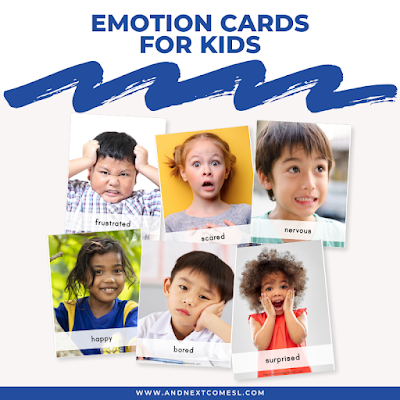
Looking for Other Ways to Teach Emotions? Grab these Emotion Cards!

Go one step further and use these full color emotion cards to help kids learn about their feelings and emotions. You can even print them off and turn them into a matching game!

Emotion cards for kids

Click here to get your set of emotion cards

Free printable emotions dice game for kids

Continue reading "Free Printable Emotions Dice Game"

Wednesday, April 03, 2019

A Simple Reminder About Parent Guilt

All parents experience parent guilt or mom guilt at some point. This simple reminder is for you.

An important reminder about mom guilt or parent guilt

I think every parent encounters feelings of guilt at some point. We all ask ourselves questions like:

Am I doing enough for my child?

Am I failing my child?

Am I giving all of my children equal amounts of attention?

This list goes on.

Sometimes we know we need help, but sometimes we feel guilty asking for said help. This is something that I really struggle with.

So instead ask yourself this question: are my kids happy right now in this moment?

If yes, then you are doing enough. And no, you are not failing your children.

As hard as parenting can be, you've got this! You just need to reframe the questions and your expectations first.

**This post was originally shared on my Instagram account on March 15, 2019.** 
Click here to see the original post.

Other Resources You'll Love

Autism Resources for Parents

10 Things to Remember When Advocating

Advocacy Tips

An important reminder about mom guilt or parent guilt
Continue reading "A Simple Reminder About Parent Guilt"

Monday, April 01, 2019

Free Printable WH Question Word Puzzles

Are you working on teaching your kids about WH question words? These free printable question word puzzles are a great tool to help practice the different WH question words.

If you're busy working on comprehension with your kids, like I have been with my son, then you likely already know how tricky WH questions can be for hyperlexic kids.

These free printable WH question word puzzles are a great way to work on teaching different question words and what they mean. They make a great addition to the question word dice, question word posters, and question word cards.

Free printable WH question word puzzles

About this Free Printable WH Question Word Puzzles

This set of question word puzzles is a great way to work on understanding different WH questions and what they mean.

These puzzles work on the following question words: what, when, who, why, where, how, which, and whose. Simply match the picture to the definition.

Download the Free Printable

This printable is three pages long. It includes instructions and two pages with eight puzzles. Each puzzle features a clipart image with a WH question word and a matching explanation for what information the WH question word is trying to gather. I highly recommend laminating the pieces for durability.

To get a copy of this printable, click the link below:

>> Click here to download this free printable


Free printable WH question word puzzles

Continue reading "Free Printable WH Question Word Puzzles"